
Mind on Muskrats
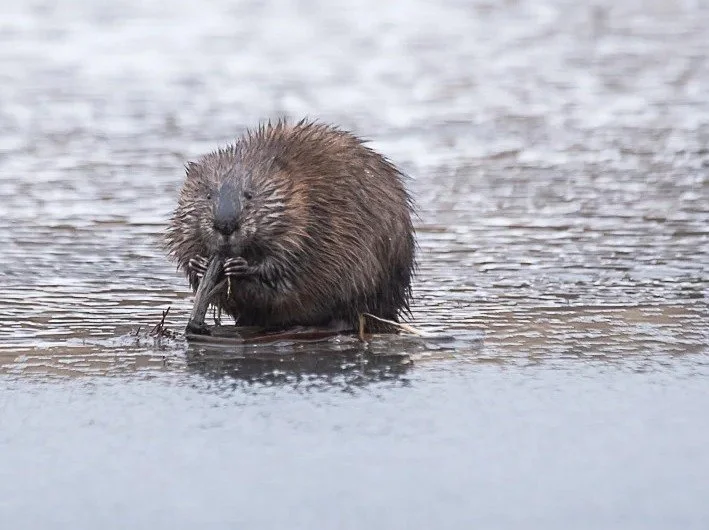
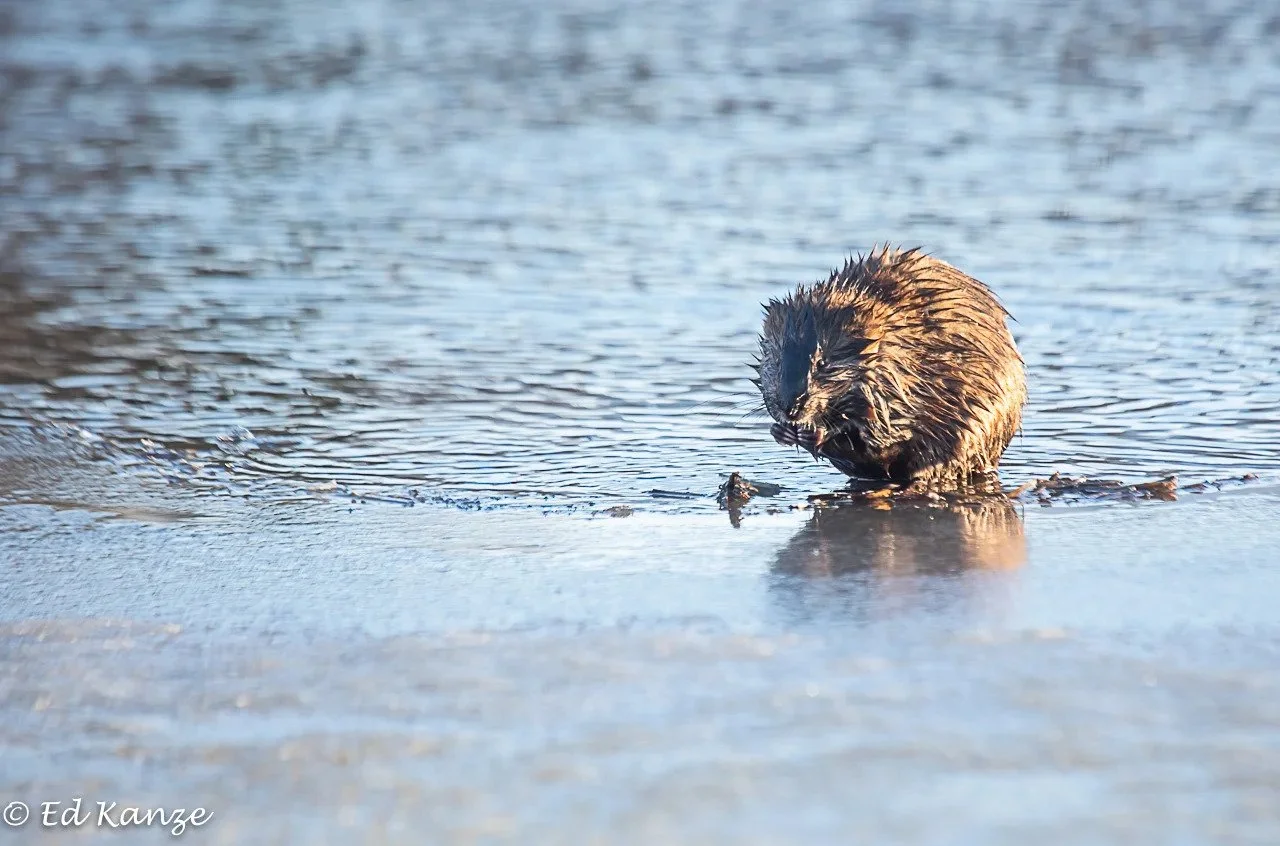
It’s February and winter is in full swing. At the refuge, I observe the sights of the sea- son; some good, others bad, and a few downright ugly! Whether it’s a brown blob on the snow, refuge volunteers on the ice, or a snowy wing print near a grotesque gutted mess, my mind turns to muskrats and their endless unique winter challenges.
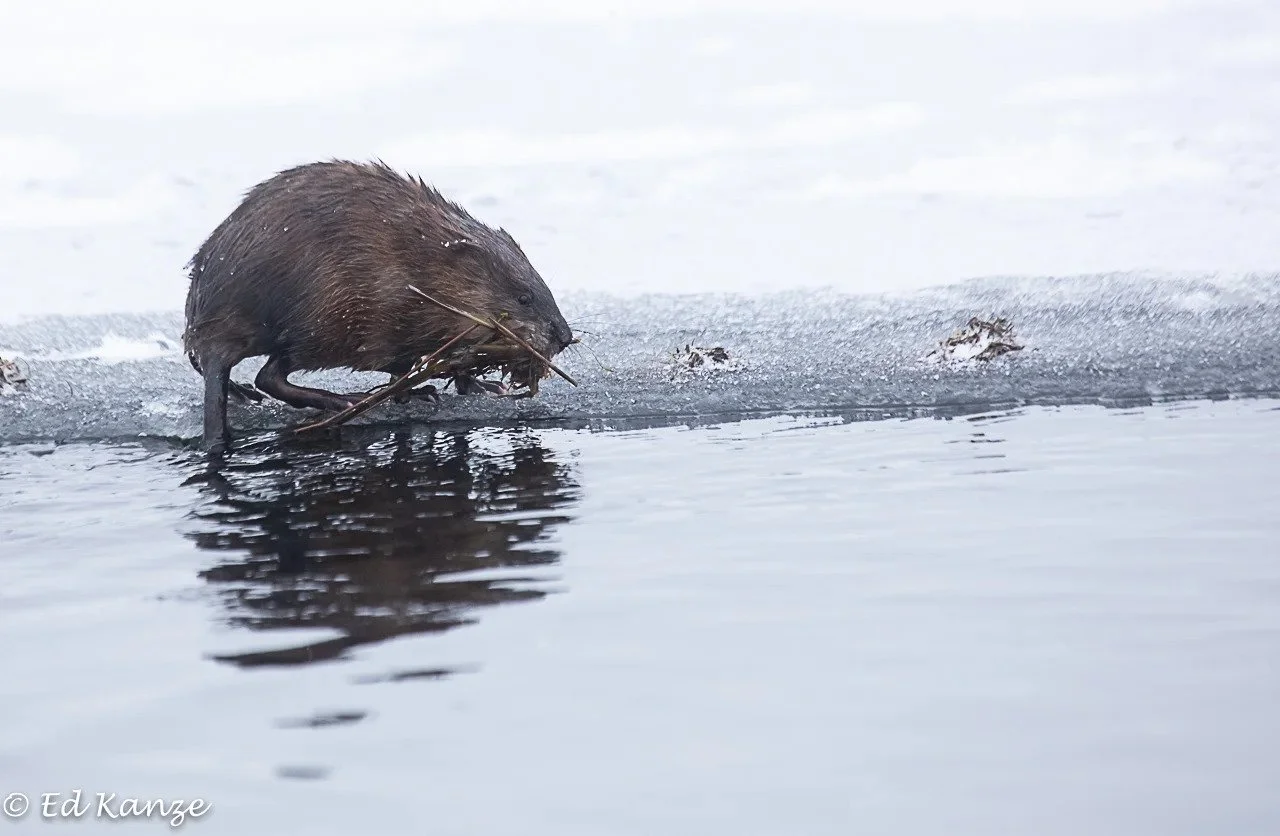
As humans, we tend to spend winter days in relative comfort, going from heated buildings to heated vehicles, to heated grocery stores, and homes. Muskrats, on the other hand, remain active in wetlands, enduring whatever winter has to offer beneath the ice. Since hibernation isn’t on the agenda, muskrats start winter preparations before the cold arrives. These clever, cold-water engineers dig a series of shallow, interconnected channels to use for easy underwater travel, escape from predators, and access to deeper water feeding areas. At one end of a channel, muskrats build a house from the bottom up, by stacking wild rice and other aquatic plants with the mud dug from channels. The resulting dome is a miniature marshy Taj Mahal, stretching three to four feet high and a foot or more in diameter, with underwater entrances connecting to channels, and one or two dry living chambers above the water line! Since they don’t store food, muskrats venture out to find food all winter long. They swim, dive, and dig roots and tubers under the ice, before going back to the safety and warmth of their houses to eat.
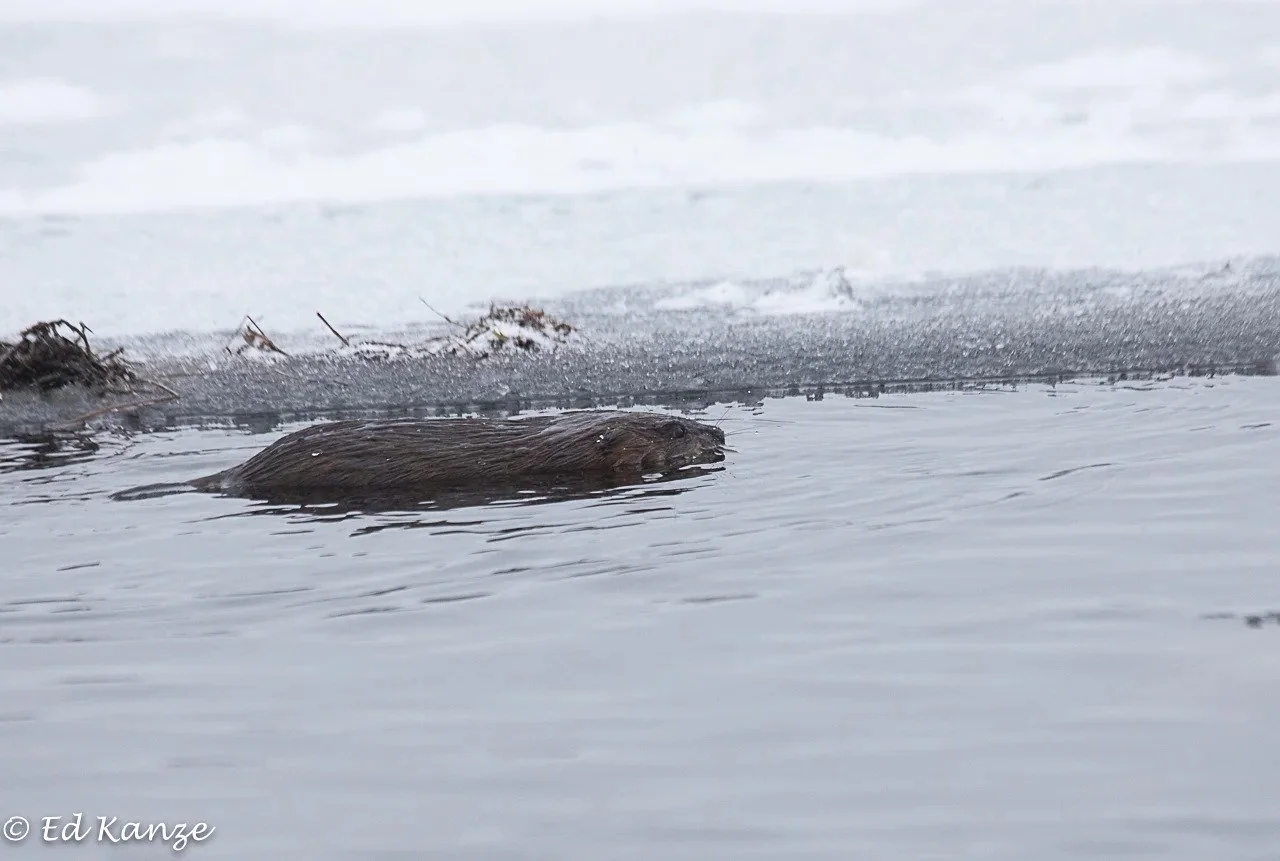
Don’t let a muskrat’s appearance fool you. This critter is an extreme athlete who can free-dive while holding its breath underwater for fifteen minutes or more! It’s quite a feat since the aver- age human can only hold their breath for 30 to 90 seconds, while most trained free-diving athletes can hold their breath for 3 to 5 minutes.
Making multiple trips for food expends an enormous amount of energy, so it’s no wonder muskrats need to consume about one-third of their body weight in calories daily. If a muskrat is forced to travel further to find food, it builds a miniature home away from home (called a push- up), that offers protection for feeding and a place for the muskrat to catch its breath. Push-ups are simply holes in the ice, with vegetation pushed through, to keep them from refreezing solid. No ice augers are needed - muskrats can chew holes in the ice with their teeth!
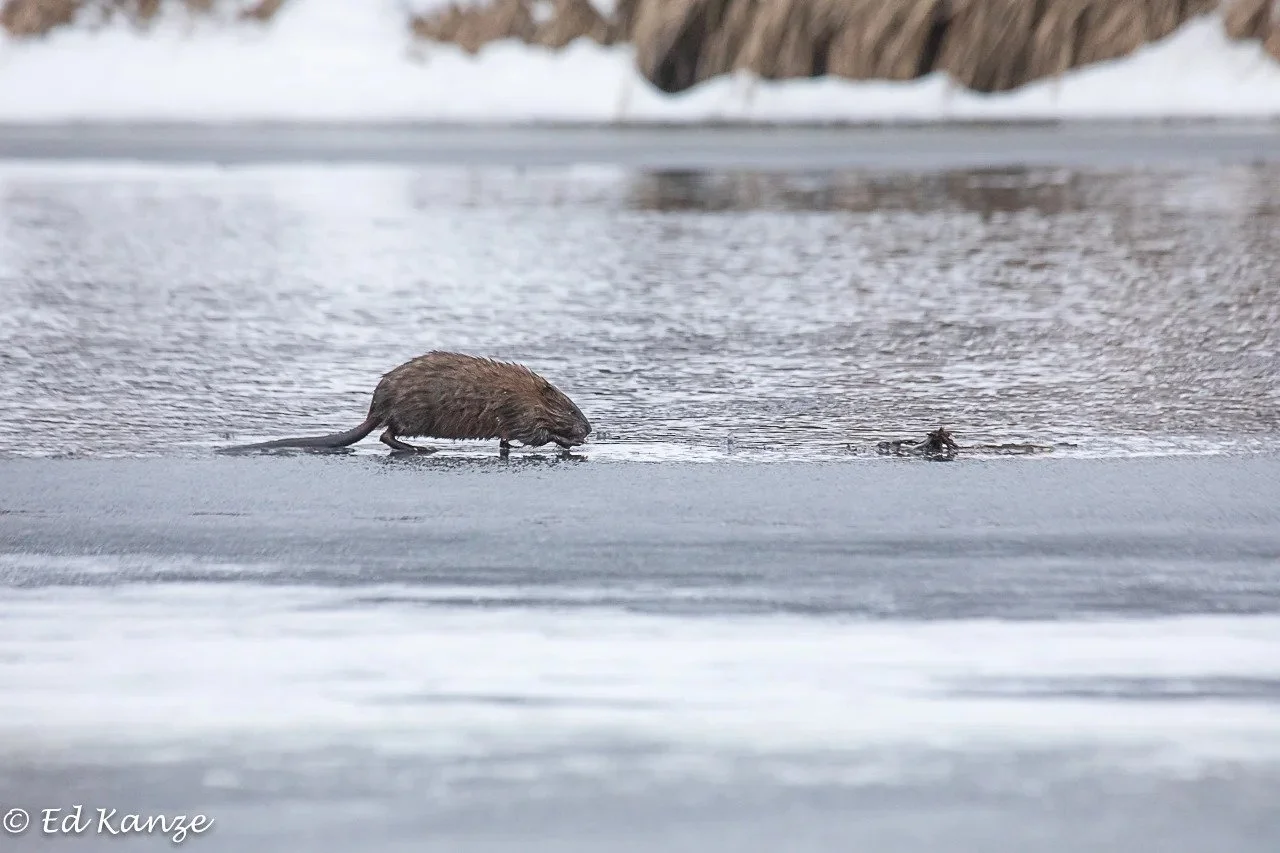
During an especially hard winter, like this one, food becomes scarce and muskrats are seen wandering on land. An above- ice excursion is risky and usually a last-ditch effort for the muskrat to find food. Unfortunately, brown blobs tend to stand out in a stark winter landscape, so muskrats that don’t succumb to the cold may be eaten by mink, otter, coyotes, owls, or other predators. Some years, half of a muskrat population can be dead by mid-winter. Finding grotesque gutted messes (identified only by the remaining tail) in the snow tells the muskrat’s perilous story.
For the refuge, counting muskrat houses in winter provides an estimate of their population. If you see hardy, half-frozen refuge volunteers Paul Madden and Beth Deimling trudging on ice- covered wetlands, that’s what they are doing! Many muskrat houses in a wetland suggest a robust local population and a functioning wetland ecosystem. A long-term decrease in houses over years may indicate a drop in the muskrat population or a decline in wetland quality (i.e., lack of aquatic vegetation for food). Since muskrat populations have declined nationwide recently for unknown reasons, keeping track of their numbers is more important than ever. The next time you see a muskrat, remember to applaud it for being an architect, engineer, extreme athlete, and a necessary part of any wetland ecosystem.
by Judy Sefchick, Wildlife Biologist, Missisquoi NWR
The pictures accompanying this story were generously shared by Ed Kanze, an Adirondacks naturalist, guide, and photographer. You can see more of his incredible photography at https://www.edkanze.com/news. Explore his website at https://www.edkanze.com/